Article
Mar 16, 2026
Post-ITC Credit Reality Check: How Top Solar Operators Are Protecting Margins Without Hiring More Sales Reps
Post-ITC solar margins are shrinking because of slow, costly sales cycles, not just tax credit changes. This article shows how top residential solar operators protect profits by showcasing a homeowner's savings in on-brand proposals during the first conversation, using AI solar designs, and white-label proposal software that simplifies selling solar.
The Investment Tax Credit changes didn't just shrink margins. They exposed a problem that was always there.
We work with solar panel installation companies every day, and what we saw after the ITC fallout was predictable: slower sales cycles, slow sales cycles that were already costly suddenly became much harder to justify. The operators who came out ahead didn't solve this by hiring more reps. They solved it by adjusting how their solar design and sales process actually works.
Here's what we watched play out, and why it matters more now than ever.
Why Did Solar Margins Shrink After the ITC Changes?
Everyone blamed the credit adjustment. Fair. But in our experience, it masked a deeper issue: sales cycles that were already too slow and too expensive.
Think about what a typical proposal costs you. A lead comes in. Your rep takes a call. Someone in the back office spends forty minutes on a solar design. A proposal goes out, later that day, or even the next day. By then, the lead is already three conversations deep with a competitor.
That process costs money every cycle, whether the deal closes or not. And when you do close, the handoff to a solar panel installation crew depends on a design that was rushed or built on guesswork. Errors at that stage don't just cost time. They cost trust, and in residential solar, trust is everything.
What Do Top Residential Solar Operators Do Differently?
The companies we saw protecting margins right now didn't cut corners on quality. They cut the lag out of their process.
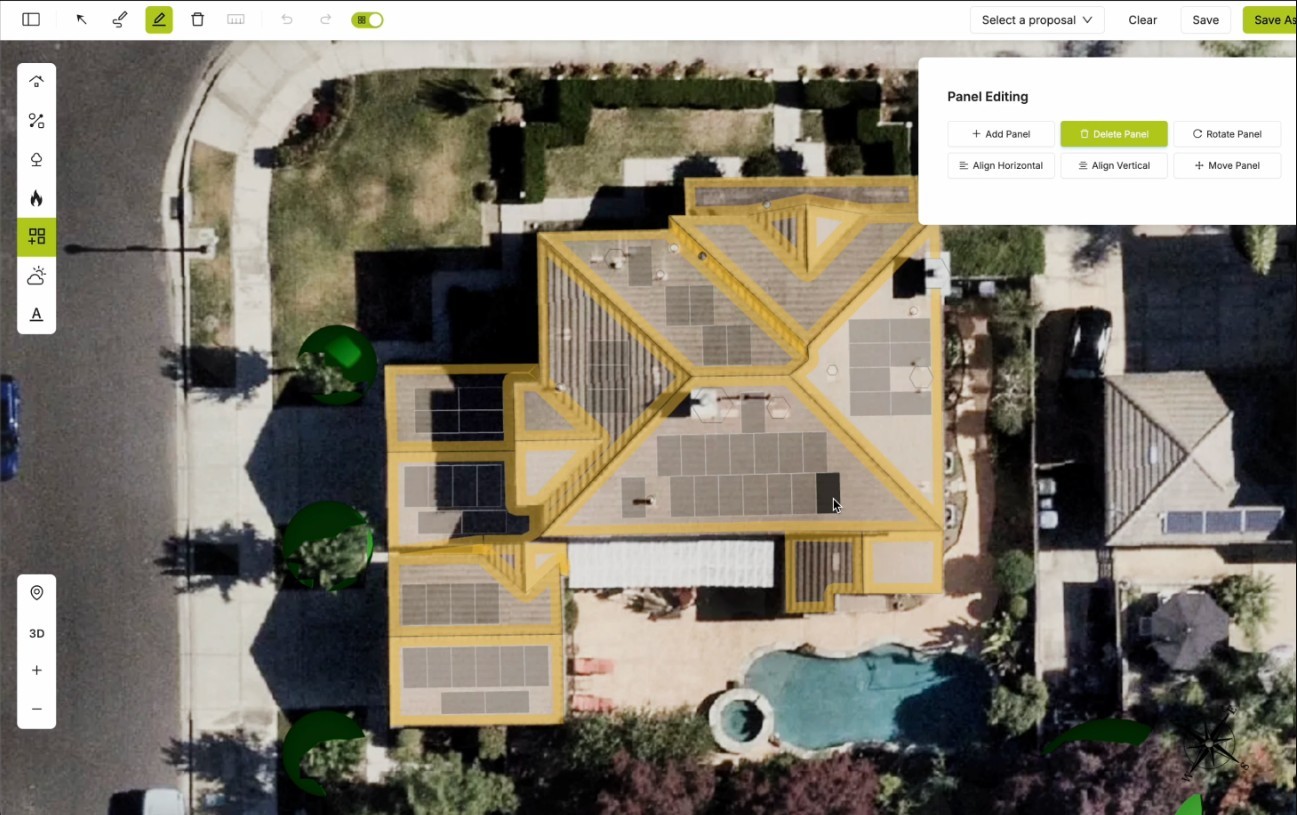
They moved the solar design process out of the back office and into the sales conversation. Instead of routing every lead through a separate design team, they put accurate design tools directly in the hands of the rep. The design happens in the room, while the customer is still engaged.
They stopped sending generic proposals. They started using a tool that produces branded, accurate output in under a minute that removes the delay that kills momentum and signals professionalism instantly.
And critically, they stopped guessing on shading. Real imagery, real shading calculations, on the spot. Ones that financiers could trust. Ones that installers could install. . All of this leads to the panel installation going smoother because the design was accurate from day one, not patched together after the customer signed.
The result is not just speed. It's confidence. The rep doesn't say "Let me get back to you." They say "Here it is. Want to walk through it now?"
Is Hiring More Sales Reps the Solution for Solar Companies?
No. And here's why we don’t recommend operators do it right now.
Every new rep adds salary, commission, training time, and management overhead before closing their first deal. In a compressed margin environment, you're betting volume growth outpaces cost growth. That's a bad bet when the residential solar market itself is contracting. We've watched too many operators lose that bet.
The better question isn't "how do I close more deals?" It's "how do I close the same deals faster, cheaper, and hand them off to my solar panel installation crew without errors?"
AI solar design tools don't sleep, don't need onboarding, and won't quit for a competitor's offer. They make every rep you already have more productive, and every installation crew less likely to hit a costly on-site problem. That's operational leverage, not headcount inflation.
How Does a White-Label Platform Improve Solar Sales ROI?
If your team averages five days from lead to signed proposal, and you compress your solar design turnaround to less than 2 minutes, you've increased effective sales capacity without adding a single salary to your payroll.
Instant design eliminates the "I'll think about it" window. The customer sees their roof, their numbers, their projected savings, and their proposal before they leave the conversation. That's a close rate improvement that compounds across every rep on your team.
But speed and accuracy mean nothing if the customer experience feels like it came from a third-party tool. A white-label platform ties everything together under your own brand, your logo, your colors, and your domain. The customer's entire journey, from first solar design to signed contract to completed solar panel installation, looks and feels like you.
That branded consistency builds trust in a skeptical market. And in my observation, trust is what separates the operators growing right now from the ones still trying to staff their way out of a fundamentally operational problem.
Which Solar Design Tool Should Installation Companies Use?
If your workflow still relies on back-office design queues, overnight turnarounds, or manual shading reviews, margins will keep shrinking regardless of how many reps you add.
That's exactly why we recommend Aerialytic. Our solar design tools generate site-accurate layouts in under 60 seconds with financier-approved shading accuracy, precise enough to hand directly to your solar panel installation crew. And their white-label platform means every touchpoint carries your brand, not theirs.